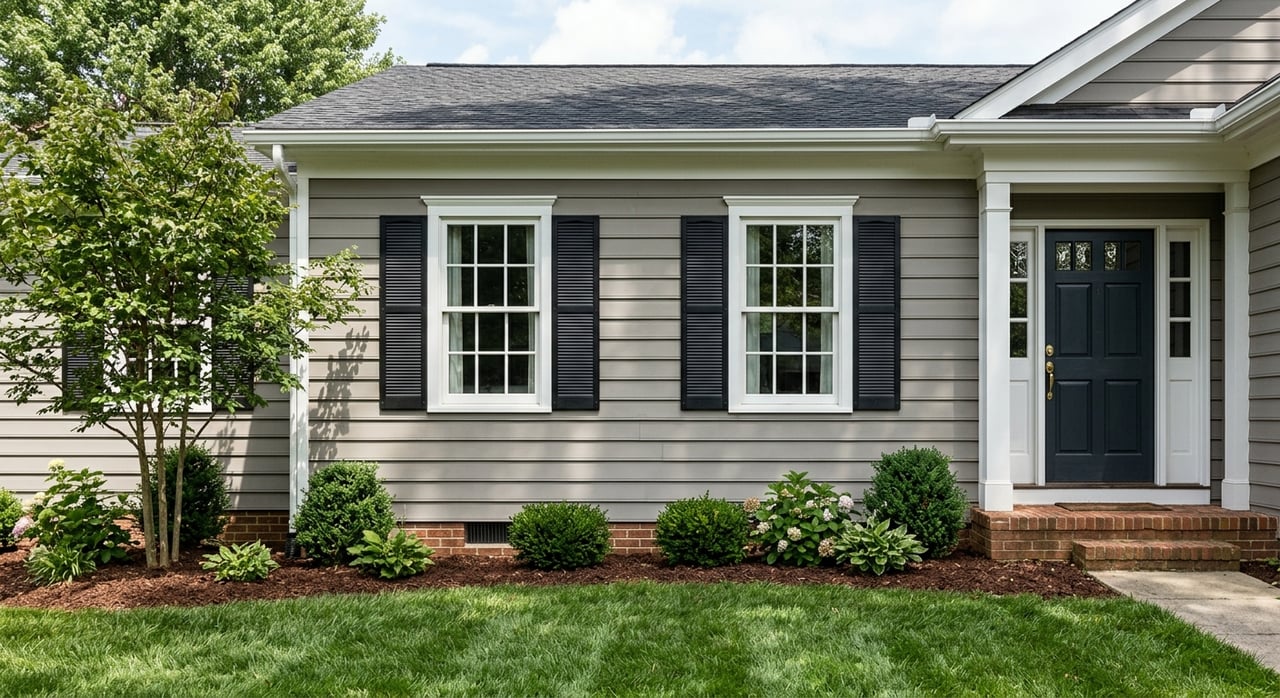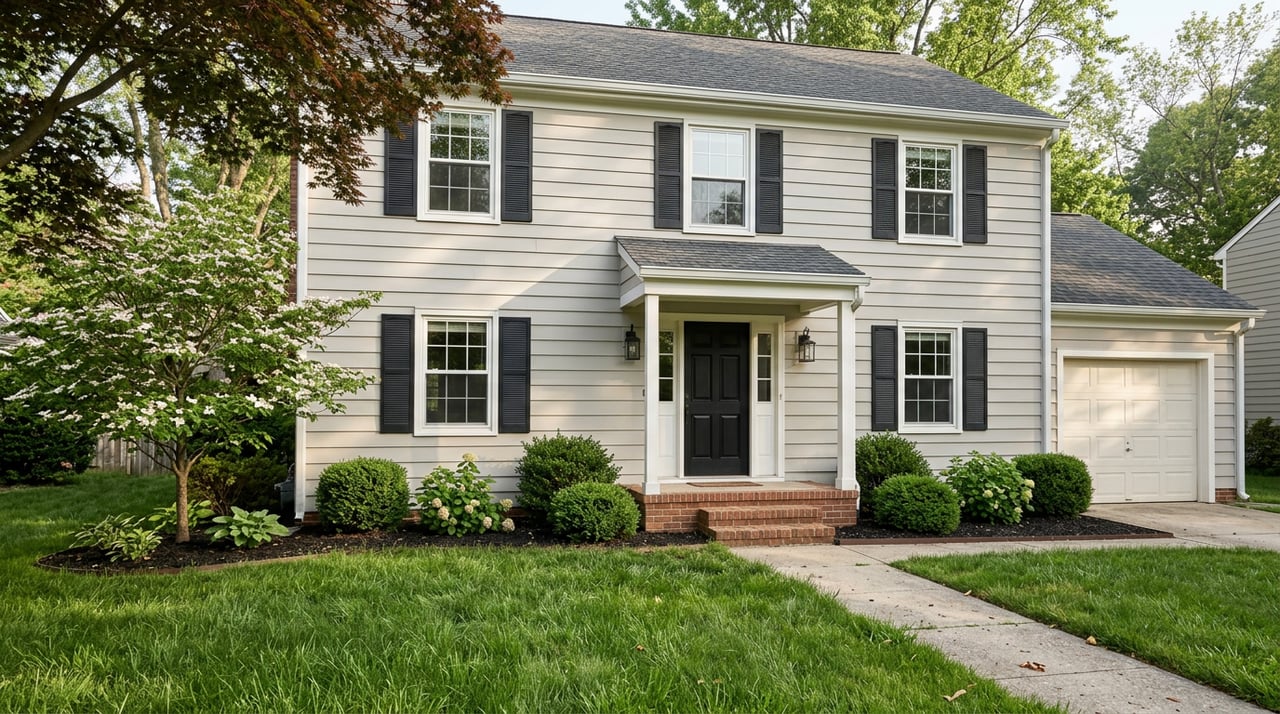
Take two identical houses with the same square footage and the same thermostat setting. Put one in Charleston and the other in Beckley, and the Beckley house needs about a sixth more heat over a normal year. Now give the Beckley house a gas furnace and its twin down the street a heat pump or a propane tank. Those three houses don't just burn different fuels. They answer to different price calendars this winter, and Beckley's climate makes each calendar count for more.
That's why the "Heat" line on a Beckley listing sheet belongs next to the price when you compare homes, and Thanksgiving week is when the four fuels' calendars split furthest apart.
Beckley Starts the Winter With a Bigger Heating Load
NOAA's 1991–2020 climate normals give Beckley Raleigh County Airport 5,060 heating degree days a year at a 65°F base, against 4,353 at Charleston's Yeager Airport. Heating degree days measure how far and how long outdoor temperatures stay below a comfortable indoor level, so that gap means roughly 16% more heating demand in Beckley over a normal year. Over the same 30-year normals period, Beckley's mean annual temperature is 52.9°F, compared with 56.2°F in Charleston, and its average snowfall is 55.9 inches a year to Charleston's 31.5.
That extra load is why rate news matters more here. When the per-unit price of heat goes up, a household that buys more units feels a bigger increase, and an average Beckley house buys more units than the same house in Charleston.
Each Fuel Changes Price on Its Own Schedule
Here is how the four common heat sources stand on November 26, 2026.
| Heat source | Dated figure | What changes next |
|---|---|---|
| Electric, Appalachian Power | $183.07/month at 1,000 kWh; $344.53 at 2,000 kWh, effective Nov. 1, 2026 | Securitization case pending |
| Natural gas, Mountaineer Gas | New base rates approved Nov. 2026 | New rates start Dec. 1, 2026; 2027 infrastructure increment Jan. 1, 2027 |
| Propane | $3.785/gal, Lower Atlantic region, week of Nov. 16, 2026 | Weekly market price |
| Heating oil | $5.728/gal, East Coast, week of Nov. 16, 2026 | Weekly market price |
EIA publishes delivered-fuel prices weekly, so the propane and oil rows will have moved by the time you read a listing.
All-Electric Homes: Steady Base Rates, Bills That Follow Usage
Appalachian Power's West Virginia rates page lists sample residential bills effective November 1, 2026: $183.07 a month for 1,000 kWh and $344.53 for 2,000 kWh. Those are whole-house bills covering lights, appliances and water heating along with heat. Going from 1,000 to 2,000 kWh adds $161.46 a month, so a house that runs a heat pump or baseboard heat through a Beckley January lands in very different territory than a gas-heated neighbor whose electric meter only carries the lights and the refrigerator.
The base rate has been settled for a while. WV MetroNews reported in May 2026 that the Public Service Commission approved an increase of $4.84 "per 1,000 kilowatts used," about 4% for residential customers. The increase was delayed and took effect July 1, 2026, according to a later MetroNews report.
One open item is still on the docket. Appalachian Power's securitization filing, made March 13, 2025, covers $2.6 billion in costs, including plant balances, deferred storm expenses and $492 million in under-recovered energy costs, pending PSC adjustments. The PSC docket lists it as Case 25-0310-E-PC. No household bill effect has been set.
The utility itself points to usage as the main driver this season. Lootpress reported on November 5, 2026 that Appalachian Power customer-experience manager Tina Massey attributed many higher bills to increased heating use. In a 5,060-degree-day town, that's the part of an all-electric house's cost that rate stability doesn't cover.
Gas Homes: Two Changes Inside Five Weeks
Mountaineer Gas runs lines through Beckley. The Register-Herald covered the company replacing a 2,000-foot, 1940s-era steel main on Harper Road that served more than 50 homes, with the new polyethylene section running from North Western Avenue to Westwood Drive. Mountaineer isn't the only gas company in the county, though. Hope Gas's 2026 tariff names Raleigh County communities it serves, including Glen Daniel, Pettus, West Pettus, Saxon, Packsville, Jarrolds Valley, Artie, Bolt, Eunice and Wright. Mountaineer serves about 218,000 homes and businesses in 50 of West Virginia's 55 counties and asks customers to check availability at a specific address. So "gas heat" on a listing tells you the fuel, but not which company sends the bill.
For Mountaineer customers, the price changes the week after Thanksgiving. WDTV reported on November 6, 2026 that the PSC approved a settlement in the company's rate case, with new rates starting December 1. WDTV reported that the rate charged for gas usage will increase, and that the order doesn't state an average household change.
A second date follows on January 1, 2027, when PSC-approved 2027 infrastructure rate increments take effect in Case 26-0704-G-390P. A gas-heated Beckley house runs its furnace through a longer, colder season than the same house in Charleston, so bills from last winter will understate this one by however much those two changes add.
The two gas companies don't price the same, either. In the PSC's statewide comparison, which models a 13 Mcf winter month on January 1, 2025, the representative heating bill came to $145.49 for Mountaineer and $156.35 for Hope. Both rates have been revised since then. The comparison still shows that which company serves a street can matter as much as the fuel itself.
Propane and Oil Homes: Priced by the Week
Out past the gas mains, many houses rely on a tank. Delivered fuels have no rate case at all. They follow the market week to week, and this year the two of them are going in opposite directions.
The U.S. Energy Information Administration put residential heating oil at $5.728 a gallon on the East Coast for the week of November 16, 2026, against $5.717 nationally. Propane for the same week averaged $3.785 a gallon in the Lower Atlantic region and $2.817 nationally. EIA's 2026–27 winter fuels outlook, published November 10, 2026, projects national household spending on heating oil up 21% to $2,115 this winter and propane spending down 3% to $1,246.
These are regional and national figures. A local dealer's delivered price will differ. Even so, an oil-heated house and a propane-heated house start this season with very different outlooks, and Beckley's larger heating load magnifies whichever direction a house's fuel is moving.
What to Ask for When You Compare Beckley Listings
Taken together, the table above means a listing's heat source works like a second price tag that changes on its own timetable. Here's what turns that into numbers you can compare:
- Twelve months of utility bills. Ask the seller for every bill a house generates: electric, gas or tank deliveries, and water. A full year captures January, and in Beckley, January is where heat sources pull apart.
- The gas company, confirmed by address. If the listing says gas, confirm with the utility whether that address is served by Mountaineer, by Hope, or not on a main.
- The fuel's next date. For a gas house, look at whether the bills you're handed predate December 1. For an oil or propane house, a winter of past delivery receipts will tell you more than any single week's price.
- The water bill, on the same sheet. Beckley Water Company's rate settlement was projected to raise the average residential bill by about $4.51 a month to roughly $38.68, according to Lootpress, and WOAY reported the increase was set for July 21, 2026. It's a smaller number than heat, but it belongs in the same monthly total.
Sellers can use the same list. A gas or heat-pump home with a clean year of bills is easier for a buyer to price. Our Beckley neighborhood page and an earlier post on mine subsidence coverage in Beckley cover other ownership costs that aren't on the listing price.
FAQ
Does Beckley's colder climate show up in every heating bill? Yes. Beckley's 5,060 annual heating degree days, against 4,353 in Charleston under NOAA's 1991–2020 normals, mean the same house needs more heat here no matter which fuel supplies it.
Will the Mountaineer Gas change show up on December bills? WDTV reported that the new rates apply to service beginning December 1, 2026. That means the first bills a buyer sees with those rates will cover December usage.
Is a house on a propane tank automatically cheaper or pricier to heat? Not automatically. Propane prices move weekly, and EIA projects national propane spending down 3% this winter while heating oil spending rises 21%. The house's own delivery history is the best guide.
The rates and prices here are dated public figures, shared as general information and not as financial advice, so please confirm your own numbers with the utility and the right professionals before you make an offer.
If you're weighing a gas house against an all-electric one, or wondering how your home's heat source and utility history look to a buyer this winter, Mendy Harvey can help you gather those bills and put them next to the price. When you're ready to see where your Beckley home stands, start with Get Your Instant Home Valuation.